
Sportwagenschmiede ’35’ , the future of Porsche
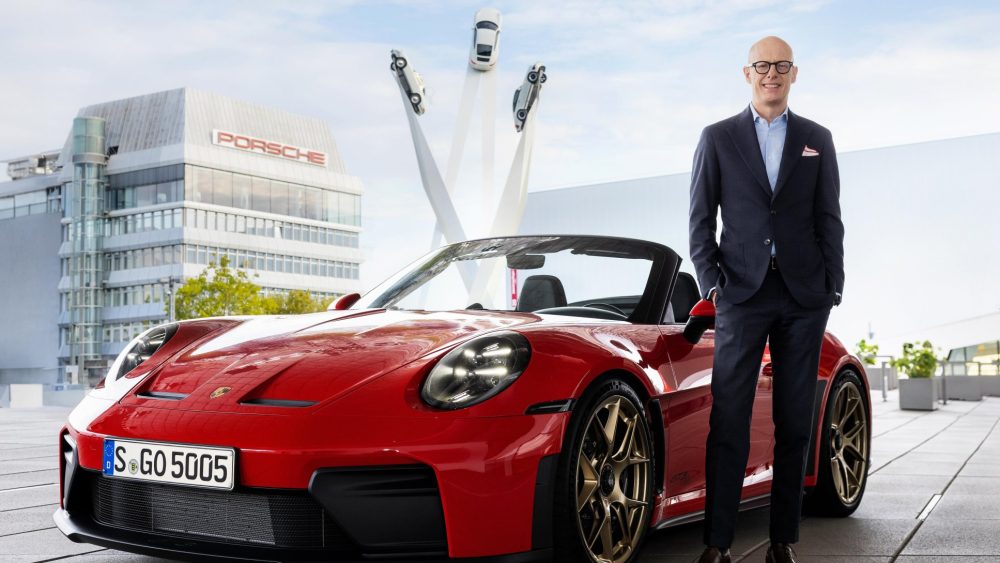
Porsche has unveiled an ambitious new strategy that could shape the character of the brand for the next decade. Called ‘Sportwagenschmiede ’35’, the plan puts sports cars, exclusivity and emotional appeal firmly back at the centre of Porsche’s future. And for enthusiasts, there are some particularly exciting promises hidden in the details.
Porsche has never been simply another car manufacturer. The 911, the Cayman, the Boxster and the brand’s growing family of SUVs and electric models have given Porsche an unusual position in the automotive world: a company that can combine everyday usability with genuine sports-car DNA.
Now Porsche wants to sharpen that identity. At its Capital Markets Day at the Weissach Development Centre, the company presented ‘Sportwagenschmiede ’35’, a strategy aimed at making Porsche more desirable, more exclusive and, importantly, less dependent on selling large numbers of cars. The guiding philosophy is simple: “Value over Volume.” And that could have some fascinating consequences for future Porsches.
More Porsche, fewer compromises
The company wants to strengthen its position between the sporty high-end premium and luxury segments. That means retaining accessible models while simultaneously moving further upmarket with more exclusive products.
Personalisation will be a major part of that push. Porsche plans to significantly expand its individualisation programme, with Sonderwunsch playing an increasingly important role. In fact, Porsche expects sales from the programme to increase sixfold in the medium term.
The ambition is to make Porsche ownership feel even more personal and exclusive. The company is also targeting an approximately 20 per cent increase in the average selling price of its top models, backed by additional product substance rather than simply higher prices.
For enthusiasts, this is arguably one of the most interesting aspects of the new strategy. Porsche is not simply looking to sell cars; it wants to sell increasingly special cars.
A supercar above the 911?
Then there is the headline-grabbing part. Porsche has announced that it is developing a mid-engined super sports car platform capable of supporting a model positioned above the 911. That is a tantalising prospect.
The 911 has occupied the heart of Porsche’s sports-car range for decades, so the prospect of a new model sitting above it immediately raises questions about what Porsche has in mind. The company hasn’t revealed the final car, but the strategy confirms that it is exploring a new halo model designed to take Porsche into an even more exclusive territory.
At the same time, Porsche says the 911 itself will receive additional highly emotional derivatives. In other words, the iconic rear-engined sports car isn’t being pushed aside. Quite the opposite: its role within the Porsche family is being strengthened. Porsche even wants the DNA of the 911 to become more evident across its entire model range.
More sports cars, more choice
Porsche is also planning a significant reshaping of its model portfolio. The number of variants is expected to fall by around 20 per cent, while sales per model variant should increase by roughly 30 per cent. At the same time, Porsche intends to expand into higher-margin D and E segments, including the possibility of an SUV positioned above the Cayenne.
But perhaps the most intriguing promise is that by 2030 Porsche plans to launch at least one brand-defining new product every year. That could make the second half of this decade a very interesting period for Porsche fans.
The end of the combustion engine? Not yet
Another important message from the strategy is that Porsche isn’t putting all its eggs in one technological basket. The company is continuing with a three-pronged powertrain strategy covering combustion engines, plug-in hybrids and fully electric technology. Porsche specifically mentions further investment in brand-defining combustion-engine and PHEV powertrains, alongside next-generation battery technology.
Meanwhile, the electric 718 Boxster and Cayman are expected to enter production, with their first full year of sales anticipated in 2028. A new B-segment SUV will also arrive around the same time, using combustion and plug-in hybrid powertrains alongside the existing electric Macan.
For Porsche enthusiasts who feared that the combustion engine might disappear from the company’s plans altogether, that is significant news.
Porsche is also getting leaner
Behind the exciting product announcements is a much tougher business transformation. Porsche wants to lower its break-even point to fewer than 200,000 vehicles, reduce development costs by up to 20 per cent and cut production personnel costs by as much as 30 per cent.
The company has also agreed on a Future Package with employee representatives that includes a socially responsible reduction of 9,000 jobs, while securing the core workforce until 2035. Several non-core activities are being scaled back or closed.
The financial targets are equally ambitious: Porsche is aiming for a medium-term operating return on sales of 10–15 per cent and an automotive net cash-flow margin of 9–12 per cent. Its long-term targets rise to 15 per cent and 12 per cent respectively.
A very interesting future for Porsche
Ultimately, Sportwagenschmiede ’35 is about much more than cutting costs or improving margins. Porsche says the name deliberately reflects what it wants the company to represent: craftsmanship, entrepreneurial thinking and, above all, the ambition to build the sportiest car in every segment in which it competes.
A mid-engined super sports car above the 911. More emotional 911 derivatives. Greater personalisation. More performance-focused products. Continued investment in combustion engines and hybrids alongside EVs. And at least one brand-defining new Porsche every year until 2030.
If Porsche can deliver on this roadmap, the coming years could be some of the most exciting in the company’s modern history. The sports car isn’t disappearing from Porsche’s future.
If anything, Porsche is telling us that it intends to make the sports car more important than ever.
