
A vision for the future of Porsche sports cars: the Mission S
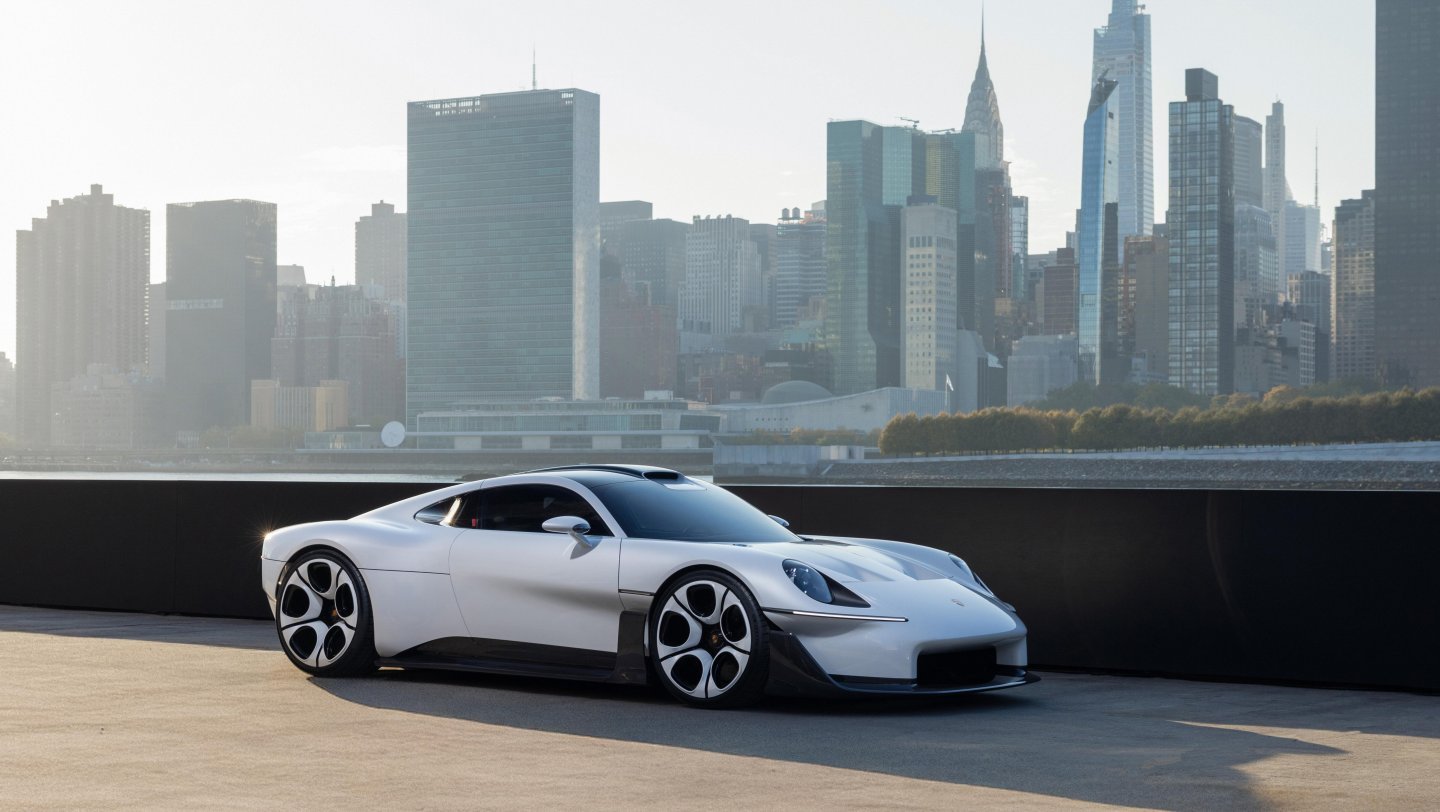
October 15, 2026, Porsche unveiled the Mission S. As part of its ‘Sportwagenschmiede ’35’ strategic realignment, it is a striking vision model that offers a glimpse into the future of the brand’s sports cars. Combining design references from legendary models with a modern, driver-focused interior, the concept previews a new direction for Porsche. More significantly, it introduces a planned mid-engined super sports car platform positioned above the iconic Porsche 911.

Unveiled in New York on 15 October 2026, the Mission S demonstrates how Porsche intends to evolve its design language while remaining faithful to the principles that have defined the brand for decades.
Inspired by Porsche’s legendary past
The Mission S was presented at a pier in Queens, New York, overlooking the Manhattan skyline. The location was chosen for its historical connection to Porsche: in 1953, photographs of the mid-engined Porsche 550 Spyder taken at the same location helped introduce the young sports car manufacturer to a wider audience.

More than 70 years later, the Mission S returns to the same setting with a similar emphasis on mid-engined engineering and sporting ambition. Its design combines familiar Porsche characteristics with modern proportions. The rounded headlights and front fenders recall the 911, while the low front end references the legendary 911 GT1. The flowing roofline and rear proportions evoke the Porsche 959, creating a distinctive silhouette that connects the brand’s motorsport heritage with its future ambitions.
Other details reinforce this connection. The cooling concept recalls the Porsche 917, while the wheels draw inspiration from the distinctive dial-style designs associated with the Porsche 928. Rather than simply recreating historic models, Porsche has reinterpreted these elements in a contemporary design that remains unmistakably its own.
A new mid-engined super sports car
The Mission S is more than a styling exercise. Porsche has announced plans for a new mid-engined super sports car platform that will sit above the 911 in its future model range. This is particularly significant given Porsche’s long history of mid-engined sports cars, from the 550 Spyder and 718 family to the Porsche 918 Spyder. These models have demonstrated the benefits of a mid-engined layout, including balanced handling and precise driving dynamics.

A dedicated platform could allow Porsche to expand its sports car offering with a model that complements the 911 rather than replacing it. For enthusiasts, the prospect of a permanent addition to the range is exciting. However, the Mission S remains a vision model, and Porsche has not yet confirmed the production car’s technical specifications, powertrain, pricing, or launch date. For now, the concept provides an indication of the direction Porsche is exploring.
A cockpit designed around the driver
Inside, the Mission S takes a different approach to the increasingly screen-dominated interiors found throughout the automotive industry. Instead of placing large digital displays at the centre of the dashboard, Porsche has prioritised physical controls, clear instrumentation and an environment focused on the driving experience.

The cockpit’s flowing lines draw inspiration from historic Porsche models, including the 550 Spyder and Porsche 356. Traditional buttons and switches are combined with modern digital functionality, creating a balance between familiar interaction and contemporary technology.
Behind the steering wheel, five round instruments reinforce Porsche’s long-standing cockpit design tradition. The central rev counter features an analogue needle with a digital display, while the instrument arrangement can adapt to different driving modes. The concept also reinterprets the Sport Chrono element and retains the traditional Porsche vehicle key position to the left of the steering wheel.
Another interesting feature is the absence of a permanently integrated central touchscreen or passenger display. Instead, a retractable smartphone mount compatible with Apple’s MagSafe technology allows the driver’s own device to provide navigation and other information.

The My Porsche app offers additional functionality, including historically inspired digital instrument designs. Whether these solutions will reach production remains unknown, but the Mission S suggests that Porsche is exploring ways to integrate technology without allowing it to dominate the driving experience.
Motorsport inspiration in every detail
The Mission S’s exterior and interior colours further underline its connection to Porsche’s racing heritage. Its palette combines white, grey and red tones, including specially developed finishes such as Firn White Metallic, Light Red Metallic and Black Chrome.
The integrated active rear wing also demonstrates how aerodynamic functionality can be incorporated into the overall design. Rather than treating performance features as separate additions, Porsche has made them part of the car’s visual identity. These details reflect a philosophy that has shaped the brand for generations: combining engineering purpose with distinctive design.
What the Mission S means for Porsche’s future
The Mission S offers insight into Porsche’s ambitions for its next generation of sports cars. Its exterior explores how classic design elements can evolve, while its interior demonstrates a commitment to keeping the driver at the centre of the experience.

The announcement of a future mid-engined super sports car platform is arguably the most important development. A model positioned above the 911 could add a new dimension to Porsche’s range while drawing on the company’s extensive mid-engined engineering experience.
The challenge will be translating the concept’s ideas into a production car that delivers the performance, handling and driving character expected of the Porsche name.
Our Take: A future rooted in heritage
At Love for Porsche, what makes the Mission S particularly interesting is its balance between tradition and innovation. The concept does not attempt to abandon Porsche’s past. Instead, it reinterprets familiar design cues, celebrates the brand’s motorsport history, and explores a more focused approach to in-car technology.
Its driver-oriented cockpit is especially noteworthy at a time when digital screens increasingly dominate modern interiors. The emphasis on physical controls and clear instrumentation feels consistent with what enthusiasts value in a sports car.

The planned mid-engined platform is equally promising. If Porsche can turn this vision into a production model with a distinctive character of its own, it could become an important addition to the brand’s portfolio. There are still many unanswered questions, but the Mission S has already offered Porsche enthusiasts something exciting to consider: a vision of the future that remains firmly connected to the company’s heritage.
The Mission S is not yet a production Porsche, but it provides a compelling glimpse of what could come next in the world of Porsche super sports cars.
Pictures ©Porsche AG


