
Porsche achieves fabulous Nürburgring lap time with hybrid prototype race car
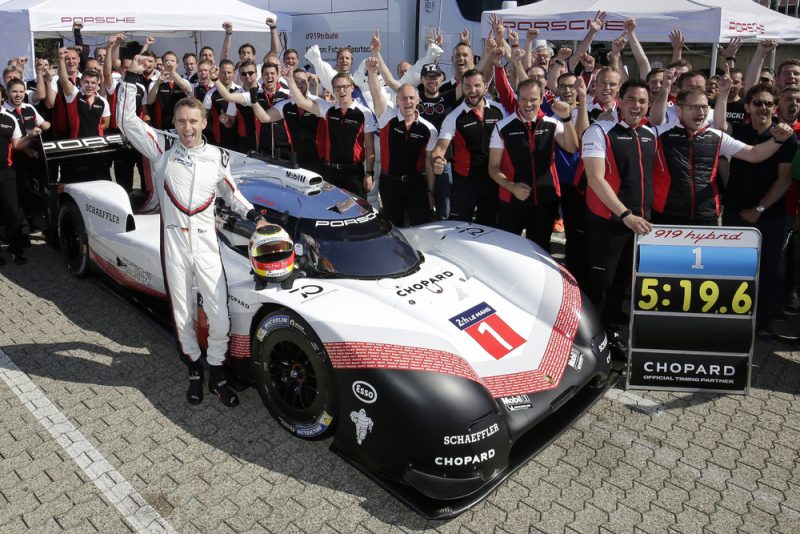
For the Porsche 919 Hybrid Evo the entire hardware of the power train remained untouched. The 919 is powered by a compact two-litre turbo charged V4-cylinder engine and two energy recovery systems – brake energy from the front axle combined with exhaust energy. The combustion engine drives the rear axle while the electro motor boosts the front axle to accelerate the car with four-wheel drive. At the same time it recuperates energy from the exhaust system that otherwise would pass unused in to the atmosphere. The electrical energy that comes from the front brakes and the exhaust system is temporarily stored in a liquid-cooled lithium ion battery.
The WEC efficiency regulations limited the energy from fuel per lap by using a fuel flow meter. The V4 combustion engine’s output back then was around 500 hp. Freed from these restrictions, equipped with an updated software but running the regular race fuel (E20, containing 20 per cent bio ethanol), the Evo version delivers 720 hp.
Because the amount of energy from the two recovery systems that could be used was limited as well in terms of electric megajoule per lap, the systems stayed far below their potential. With now full boost being available, the e-machine output increased by ten per cent from 400 to 440 hp.

The engineers also unchained the aerodynamics of the 919 Evo from the regulations. The new larger front diffuser now balances the new and very large rear wing, both of which have actively controlled drag reduction systems (DRS). The hydraulically operated systems trim the trailing edge of the front diffuser and opens up the slot between the rear wing main plane and the flap respectively in order to reduce drag. Underneath the Evo the turning vanes and floor have been optimised. Fixed height side skirts increase the aerodynamic performance again as efficiently as possible. In total the aero modifications resulted in 53 per cent higher downforce and an increase in efficiency by 66 per cent (compared to the 2017 Spa WEC qualifying).
To help further expand the performance envelope, the Evo gained a four-wheel brake-by-wire system to provide additional dynamic yaw control. Furthermore, the power steering was adapted for the higher loads and stronger suspension wishbones (front and rear) were designed.
Compared to the car in conventional race trim, the dry weight was reduced by 39 kilograms to 849 kilograms. To achieve this, air-conditioning, windscreen wiper, several sensors, electronic devices from race control, lights systems and the pneumatic jack system were removed. Michelin developed special tyre compounds for the 919 Evo that produces more downforce than a Formula One car.
The “919 Tribute Tour” continues
The attempt at the Nordschleife closes the chapter of chasing records with the Porsche 919 Hybrid Evo. At rather moderate speeds, the top athlete will have several more appearances:
• July 6 and 7: VW Fun Cup Spa-Francorchamps (BE)
• July 12-15: Goodwood Festival of Speed (GB)
• September 2: Festival of Porsche Brands Hatch (GB)
• September 26-29: Porsche Rennsport Reunion Laguna Seca (California, USA)
The technical specifications of the Porsche 919 Hybrid Evo


